
Étretat
Explore Étretat with your family: dramatic chalk cliffs, coastal walks, a pebble beach, the Arsène Lupin trail, and some of the best galettes in Normandy.
0 guides · Normandy & BrittanyExplore →

The D-Day Beaches in Normandy offer families a rare mix of powerful history, dramatic landscapes, and world-class museums across 54 miles of Atlantic coastline.
Your family guide
“Beaches where history happened and children can still see the evidence. The D-Day sites make the past feel immediate.”
— San & Jo
The D-Day Beaches stretch across 54 miles of Atlantic coastline in Normandy, and visiting them with your family is one of those rare travel experiences that stays with everyone long after you get home. On 6 June 1944, Allied forces landed here in Operation Overlord, the largest military operation in history, beginning the liberation of Nazi-occupied Europe. Walking the same sand today, with the wind off the Atlantic and the quiet of the memorials around you, is genuinely moving.
What makes this area so well-suited for families is the way history becomes tangible here. Your kids are not just reading about events in a textbook. They are standing on Omaha Beach looking out at the same water, peering into preserved German bunkers at Longues-sur-Mer, and watching the tide come in around the remains of Port Winston, the extraordinary prefabricated harbour at Arromanches. The contrast between the peaceful Normandy countryside and the weight of what happened here creates something you cannot manufacture anywhere else.
The five named landing beaches, Utah, Omaha, Gold, Juno, and Sword, each have their own character and their own story. Between the beaches, you will find world-class museums, solemn cemeteries, and small villages like Ste-Mère-Église that wear their D-Day history proudly. Add in fresh Normandy seafood, rolling green countryside, and a genuinely beautiful coastline, and you have a family trip that is both enriching and memorable.
Best things to do
Normandy American Cemetery and Memorial
Nearly 10,000 Americans are buried here, overlooking Omaha Beach. The visitors' centre has a genuinely excellent exhibit that puts the scale of the operation into context for kids and adults alike. It is a place that demands quiet, and most children rise to that without being asked.
Omaha Beach and the Les Braves Sculpture
Omaha was the site of the fiercest fighting on D-Day, and standing on the beach today, looking back at the bluffs, makes that history feel very real. The Les Braves sculpture rises from the sand with three elements: Wings of Hope, Rise of Freedom, and Wings of Fraternity. A powerful starting point for any D-Day visit.
Pointe du Hoc
This clifftop site is one of the most visually dramatic stops on the entire D-Day trail. The craters from Allied bombing are still clearly visible across the headland, and the preserved German bunkers and ranger climb sites are fascinating to explore. A granite monument stands 30 metres above sea level on the cliff above a bunker.
Arromanches and the Mulberry Harbour Remains
The rusting concrete caissons of Port Winston still sit in the bay at Arromanches, and seeing them at low tide is genuinely extraordinary. The D-Day Landing Museum in the village explains how this prefabricated harbour was constructed and deployed, and the nearby Arromanches 360 cinema wraps you in the Battle of Normandy on nine screens with a 19-minute film.
Juno Beach Centre
Dedicated to the Canadian role in the D-Day landings, this centre opened in 2003 and was funded by the Canadian federal and provincial governments, France, and Canadian veterans. The storytelling is accessible and engaging, and the location right on Juno Beach means you can walk straight from the exhibits onto the sand where it all happened.
Ste-Mère-Église Village
This small village is famous for the role of paratroopers on D-Day, with approximately 13,000 deployed during the Normandy operations. The church steeple still has a parachute and dummy hanging from it as a memorial, and kids tend to love this detail. The village has a warm, lived-in feel and a good museum dedicated to the airborne operations.
Longues-sur-Mer Gun Battery
One of the best-preserved German defensive sites along the coast, with four reinforced concrete casemates, original artillery pieces still in place, and a fire command post on the cliffs. It is accessible year-round and free to visit, making it a great add-on to a day exploring Gold Beach and Arromanches.
Pegasus Bridge
This was the site of the first British liberation action on D-Day, and it remains one of the most compelling stops on the D-Day trail. The original bridge is now in the adjacent museum, and a replica spans the canal in its place. The nearby café, Café Gondrée, claims to be the first house liberated in France.
Our verdict
Kids
Bunkers, craters, dramatic cliffs, and beaches where real history happened. Older children are often deeply moved; younger ones engage with the physical landscape.
Culture
World-class museums, national memorials from multiple Allied nations, and a depth of historical significance that is almost unmatched anywhere in Europe.
Food
Normandy is a fantastic food region. Fresh seafood, incredible dairy, local cider, and Camembert cheese make every meal something to look forward to.
Nature
The Atlantic coastline is genuinely beautiful, and the rolling Normandy countryside between sites is lovely. Not a nature-first destination, but the setting adds a lot.
Budget
Several major sites including Longues-sur-Mer and the beaches themselves are free. Museums and the American Cemetery visitors' centre are also free. Accommodation and food are mid-range.
Planning your visit
1 day
Quick visit
Omaha Beach, the American Cemetery, and Pointe du Hoc cover the core story in one full day.
2 days
Sweet spot
Add Arromanches, Juno Beach, and Ste-Mère-Église for a rounded picture of all the Allied landings.
4 days
Deep dive
Cover all five beaches, the British Normandy Memorial, Pegasus Bridge, and the German Cemetery at La Cambe at a relaxed pace.
Fun facts
13,000 paratroopers dropped from the sky
Before the beach landings even began, approximately 13,000 Allied paratroopers were dropped into Normandy in the dark. One of them got his parachute caught on the church steeple in Ste-Mère-Église and had to hang there, pretending to be dead, while the battle raged below him.
A harbour was built in just 12 days
Port Winston at Arromanches was a prefabricated harbour shipped across the Channel in pieces and assembled on site in around 12 days. It was used to unload over 2.5 million men, 500,000 vehicles, and 4 million tonnes of supplies. Parts of it are still visible in the bay today.
Five beaches, five nations, one day
The five D-Day beaches were each assigned to a different Allied force: Utah and Omaha to the Americans, Gold and Sword to the British, and Juno to the Canadians. On a single day in June 1944, forces from all these nations landed simultaneously along 54 miles of coast.
Taste the D-Day Beaches
Plateau de fruits de mer
Must tryRestaurant de L'Ile Benoist, Courseulles-sur-Mer
A classic Normandy seafood platter loaded with oysters, mussels, langoustines, scallops, prawns, crabs, and lobster. It looks spectacular arriving at the table and is a real event for the whole family.
Moules à la normande
Local favouriteRestaurant de L'Ile Benoist, Courseulles-sur-Mer
Mussels cooked in a cider sauce with Normandy cream. This is the local take on moules and it is richer and more flavourful than the classic version. Most kids who like mussels will love this, and the sauce is perfect for dipping bread.
Sole meunière
Safe choiceLa Rapière, Bayeux
Simple, buttery, and perfectly fresh, this is Normandy on a plate. Sole cooked in brown butter with lemon is one of those dishes that tastes exactly right when you are this close to the sea.
Camembert
Daily treatLocal markets throughout the area
Normandy is the home of Camembert, and eating it here, with a fresh baguette and a glass of local cider, is a completely different experience from the supermarket version. Pick some up at a local market and have a picnic between beach stops.
Tarte normande
Kids love itLa Rapière, Bayeux
A classic Norman apple tart made with local apples, cream, and a buttery pastry case. It is on almost every menu in the region and kids tend to love it. The apple-growing tradition here is the same one that produces Calvados brandy and local cider.
Explore Étretat with your family: dramatic chalk cliffs, coastal walks, a pebble beach, the Arsène Lupin trail, and some of the best galettes in Normandy.
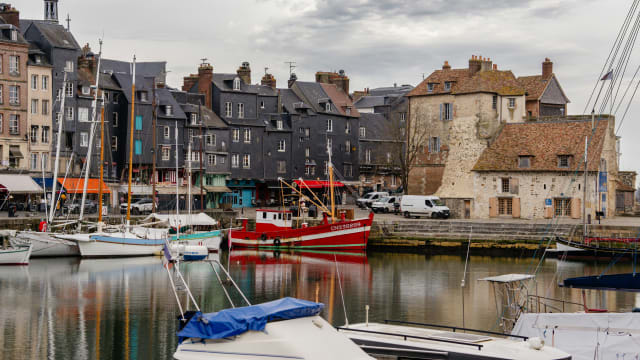
Honfleur is a compact, walkable Norman port town with a UNESCO-listed old harbour, France's largest butterfly house, and one of the best food scenes in Normandy.
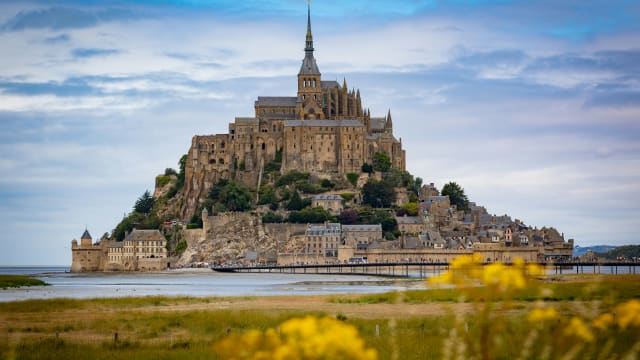
Discover Mont-Saint-Michel with your family: a UNESCO-listed tidal island with a soaring abbey, dramatic tides, rampart walks, and legendary Norman food.

Explore Mont-Saint-Michel Bay with your family: dramatic tides, guided bay walks, a medieval abbey island, and some of the best seafood in northern France.

Rouen's walkable medieval old town, immersive museums, and UNESCO gastronomy scene make it one of Normandy's best family destinations.
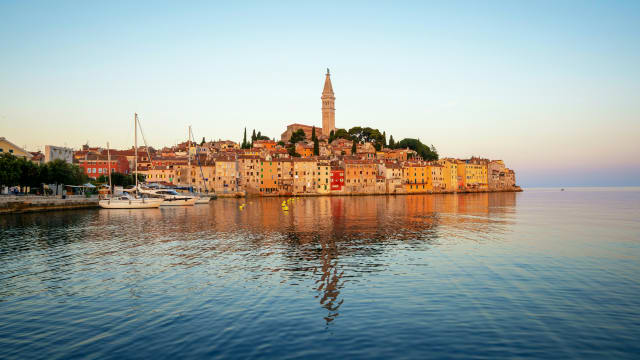
Saint-Malo is a walled corsair city on Brittany's Emerald Coast with tidal island walks, dramatic ramparts, and one of the best food scenes in northwest France.
Get the latest family travel tips for D-Day Beaches in your inbox.