
In Flanders Fields Museum
In Flanders Fields Museum in Ypres puts a real person's story in your hands. Interactive, moving, and genuinely memorable for families of all ages.
0 guides · Flanders Fields & WesthoekExplore →

Tyne Cot Cemetery in Zonnebeke, Belgium holds nearly 12,000 WWI burials. Free entry, a moving Visitor Centre, and preserved German bunkers make it unmissable for families.
Your family guide
“Nearly 12,000 white headstones, row after row. Some places teach children more than any book ever could.”
— San & Jo
Tyne Cot Cemetery is the largest Commonwealth war cemetery in the world, and visiting it with your family is one of those experiences that stays with you long after you leave. Located in Zonnebeke, in the heart of Belgium's Flanders Fields region, this peaceful hilltop site holds 11,956 burials from World War I. More than 8,300 of those soldiers remain unidentified. That single fact alone tends to stop families in their tracks.
What makes Tyne Cot so powerful for families is that it never feels like a lecture. The rows of white gravestones stretching across the hillside, the preserved German bunkers beneath your feet, and the continuous audio recording inside the Visitor Centre reading out the names and ages of every commemorated soldier all work together to make history feel deeply personal. Children often ask thoughtful questions here.
Admission is free, the Visitor Centre is genuinely engaging, and the site is well maintained and easy to navigate with children. Whether your family has a personal connection to WWI or you are simply exploring the Flanders Fields heritage trail, Tyne Cot is a visit that earns its place on any Belgium itinerary.
Best things to do
Walk among the gravestones
The sheer scale of the cemetery only becomes real when you walk through it. Nearly 12,000 white headstones stretch across a gentle hillside with 360-degree views of the Flemish countryside. It is quiet, contemplative, and genuinely moving. Older children in particular tend to go very still here.
Find the German bunker beneath the Cross of Sacrifice
The cemetery's centrepiece is the Cross of Sacrifice, placed here at the suggestion of King George V during his 1922 visit. Look closely at the base and you will spot a small gap. Through it, you can see a preserved German bunker that the cross was actually built around. Kids love finding it.
Read the names on the Memorial Wall
A curved memorial wall at the back of the cemetery lists the names of over 35,000 British and New Zealand soldiers who died in WWI but have no known grave. Together with the Menin Gate in Ypres, it commemorates all the missing of the Ypres Salient. Running your finger along a name makes it feel very real.
Explore the Visitor Centre exhibition
The on-site Visitor Centre is more engaging than you might expect. Display cabinets hold recreated battlefield debris, gas masks, hip flasks, medals, letters, and personal belongings. Exhibition panels are presented in Dutch, English, French, and German. It gives real context to everything you see outside.
Listen to the names being read aloud
Inside the Visitor Centre, an audio recording plays on a continuous loop, dictating the names and ages of every serviceman commemorated at Tyne Cot. It is a simple idea with an enormous emotional impact. Many visitors stand quietly and just listen for a few minutes. Even young children tend to sense that something important is happening.
Take in the hilltop views
Tyne Cot sits on a hilltop that gives you 360-degree views of the surrounding Flemish landscape. During WWI, this vantage point made it a strategically critical position. Standing here and looking out across the flat fields helps your family understand why so many battles were fought over this ground.
Our verdict
Kids
Younger children will follow your lead here. Older kids and teens tend to find it genuinely affecting, especially the Visitor Centre and the bunker detail. The open space is easy to move around in.
Culture
One of the most historically significant sites in Europe. The Visitor Centre, memorial wall, preserved bunkers, and the sheer scale of the cemetery make this a deeply cultural experience.
Food
There are no restaurants on site. The nearby town of Zonnebeke and the city of Ypres (about 10 km away) have plenty of family-friendly options. Plan your meals around the visit.
Nature
The cemetery is beautifully maintained with manicured grass, flower beds, and open views of the Flemish countryside. It is peaceful and green, though the focus is clearly on history rather than nature.
Budget
Entry is completely free, including the Visitor Centre. This is one of the most meaningful free family experiences in Belgium. Budget mainly for travel and any meals in the area.
Planning your visit
45 hours
Quick visit
Walk the cemetery, find the bunker under the Cross of Sacrifice, and take in the memorial wall. A focused visit covers the essentials.
2 hours
Sweet spot
Walk the full cemetery at a relaxed pace, spend time in the Visitor Centre, listen to the audio recording, and find all three preserved bunkers. This is how most families experience it best.
half days
Deep dive
Combine Tyne Cot with a visit to the Menin Gate in Ypres and explore the wider Flanders Fields heritage trail. Together they tell the full story of the Ypres Salient.
Fun facts
More than 8,000 soldiers are unknown
Of the 11,956 soldiers buried at Tyne Cot, 8,369 have no identified name. Their headstones simply read 'A Soldier of the Great War, Known unto God.' It is one of the most thought-provoking facts on the whole site.
A king helped design the cemetery
King George V visited Tyne Cot in 1922 and personally suggested placing the Cross of Sacrifice over the German bunker rather than removing it. That royal decision is why you can still peek through the gap at the base of the cross today.
35,000 names on one wall
The memorial wall at Tyne Cot lists over 35,000 soldiers who died in WWI but were never found. Together with the Menin Gate in Ypres, the two memorials account for all the missing soldiers of the entire Ypres Salient campaign.
Taste the region

Flemish beef stew (stoofvlees)
Local favouriteIn 't Klein Stadhuis, Ypres
A rich, slow-cooked beef stew made with Belgian ale, served with thick-cut fries. It is the ultimate comfort food in this region and widely available in Ypres. Hearty, warming, and a hit with kids who like a good stew.

Frites with andalouse sauce
Kids love itFrituur De Vrede, Zonnebeke
Belgian fries are in a league of their own, double-fried for that perfect crispy outside and fluffy inside. Andalouse sauce is a local favourite. You will find a frituur (chip shop) in almost every town around Zonnebeke.

Belgian waffles
Daily treatCafe De Vrede, Ypres
A proper Liege waffle, warm and slightly caramelised on the outside, is the perfect end to a reflective visit. Most cafes in Ypres serve them fresh. Simple, sweet, and universally loved by kids of all ages.

Croque monsieur
Safe choiceBrasserie Ypra, Ypres
A reliable, easy lunch option widely available in Belgian cafes and brasseries. Toasted, cheesy, and satisfying. A safe and practical choice when you have younger children who need something simple and quick.
In Flanders Fields Museum in Ypres puts a real person's story in your hands. Interactive, moving, and genuinely memorable for families of all ages.
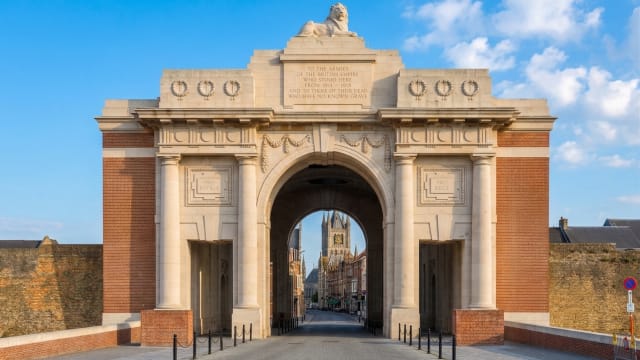
The Menin Gate in Ypres honours 54,000 WWI soldiers with nightly Last Post ceremonies. A moving, free, and memorable experience for families.
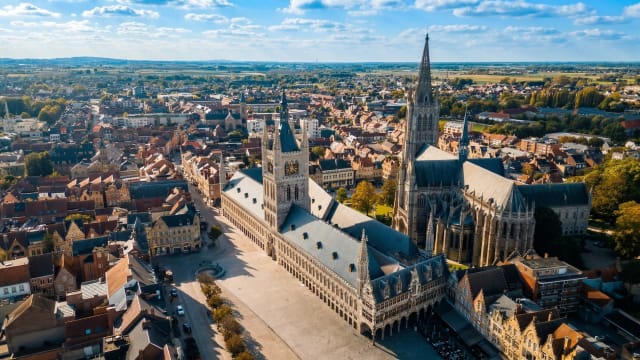
Ypres is a walkable, family-friendly Belgian city with WWI history, the nightly Last Post ceremony, a UNESCO Cloth Hall, and great Belgian food.

Explore Antwerp with kids: from the Diamond District and DIVA Museum to the zoo, Grote Markt, and the best Belgian frites you'll ever eat.

Bastogne is a compact Belgian town with world-class WWII museums, Ardennes forests, and iconic local food. A genuinely moving and memorable family destination.

The Bastogne War Museum brings WWII to life through immersive simulations, life-size dioramas, and a basement bombing shelter that leaves a lasting impression.
Get the latest family travel tips for Tyne Cot Cemetery in your inbox.