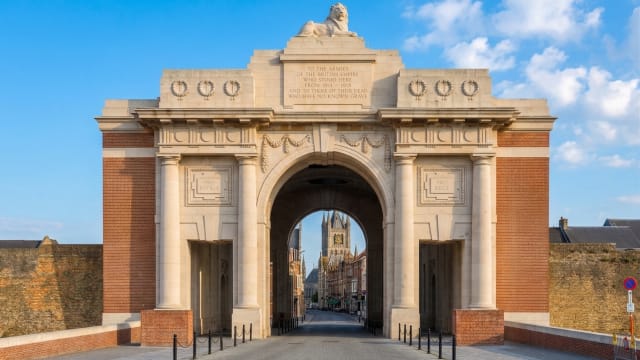
Menin Gate
The Menin Gate in Ypres honours 54,000 WWI soldiers with nightly Last Post ceremonies. A moving, free, and memorable experience for families.
0 guides · Flanders Fields & WesthoekExplore →

In Flanders Fields Museum in Ypres puts a real person's story in your hands. Interactive, moving, and genuinely memorable for families of all ages.
Your family guide
“One wristband, one personal story. This museum makes history tangible.”
— San & Jo
If you are looking for a museum that does more than display dusty objects behind glass, In Flanders Fields Museum in Ypres is something genuinely different. Set inside the breathtaking reconstructed medieval Cloth Hall, this is one of the most thoughtfully designed WWI museums in the world, and it earns that reputation every single visit.
What makes it special for families is the personal connection it creates from the moment you walk in. Each visitor receives an interactive wristband linked to a real person who lived through the war, whether a soldier, a nurse, a civilian, or a doctor. As you move through the exhibits, you scan your wristband to uncover that person's story, their fears, their experiences in the trenches, and ultimately their fate. It turns history into something your children will actually feel.
The museum does not glorify war. It is honest, moving, and at times sobering, which is exactly why it works so well as a starting point before visiting the surrounding battlefields and cemeteries. Ypres itself is a peaceful, beautifully reconstructed town today, and that contrast between its tranquil streets and the devastation it once endured is something your whole family will carry with them long after you leave.
Best things to do
Your personal wristband story
Every visitor gets an interactive wristband linked to a real person from the war. Scan it at displays throughout the museum to follow their journey, from daily life to the front line and beyond. Children find this incredibly engaging because it gives them one person to root for and wonder about.
Interactive maps of the Ypres Salient
Overlaid aerial photographs show the Ypres landscape before, during, and after the war. Craters, ruins, and trenches become visible in ways that bring the scale of destruction to life without needing to say a single word. It is one of the most visually striking parts of the museum.
Artefacts from the front line
Gas masks, helmets, uniforms, wire cutters, pigeon capsules used for espionage, and medical equipment related to shell shock and wounds are displayed throughout. These objects are real, and that realness hits differently than any textbook description ever could.
Stories of nurses, doctors, and civilians
The museum goes well beyond soldiers. It covers the experiences of nurses, pioneering psychiatrists treating shell shock, and ordinary civilians caught in the middle of the conflict. This broader perspective helps children understand that war affects everyone, not just those who fight.
Climb the Cloth Hall belfry
After the intensity of the museum, climbing the belfry for panoramic views over Ypres is a wonderful way to reset. You can see the town spread out below you, peaceful and whole, which makes the story of its near-total destruction and careful reconstruction feel even more remarkable.
Temporary exhibitions and documentary films
The museum regularly hosts temporary exhibitions covering contemporary art, archaeological work identifying fallen soldiers, and documentary films. Check what is showing when you visit because these additions often add a completely fresh dimension to the permanent collection.
The military cemeteries display
One of the most moving sections of the museum is the display dedicated to the military cemeteries that surround Ypres. Row upon row of white headstones represented here prepare you emotionally and practically for visiting the real cemeteries nearby, such as Tyne Cot.
Our verdict
Kids
The wristband concept keeps children genuinely engaged throughout. Younger children may find some content heavy, but the interactive format works brilliantly for curious minds.
Culture
One of the finest WWI museums in the world. The combination of personal stories, artefacts, and the stunning Gothic setting makes this a truly exceptional cultural experience.
Food
There is an on-site café for a post-visit break, and Ypres town centre has a good range of family-friendly restaurants within easy walking distance.
Nature
The museum itself is indoors, but the surrounding Flanders Fields countryside, with its cemeteries, memorials, and open farmland, offers a peaceful and meaningful outdoor contrast.
Budget
Admission is reasonably priced for a museum of this quality. Combined tickets with other Ypres attractions are worth looking into if you plan a full day in the area.
Planning your visit
2 hours
Quick visit
Cover the main exhibits and wristband experience without the belfry climb
3 hours
Sweet spot
Explore everything at a relaxed pace, climb the belfry, and browse the museum shop
1 day
Full day
Combine the museum with a visit to nearby cemeteries and memorials such as Tyne Cot and the Menin Gate
Fun facts
Pigeons as secret messengers
During WWI, carrier pigeons were used to smuggle messages behind enemy lines. The museum displays the tiny metal capsules attached to their legs, each one small enough to fit in the palm of your hand but carrying information that could change the course of a battle.
A city rebuilt from rubble
By the end of WWI, Ypres had been almost completely flattened. The Cloth Hall you walk through today was painstakingly rebuilt stone by stone between 1933 and 1967, using original plans and photographs. It is one of the most ambitious reconstruction projects in European history.
Where chemical warfare began
The Ypres Salient was the site of some of the first large-scale chemical gas attacks in history. The museum explains how this changed warfare forever, and the gas masks on display are a vivid reminder of how soldiers had to adapt to a completely new and terrifying threat.
Taste Ypres

Museum café
Safe choiceIn Flanders Fields Museum Café
The on-site café inside the Cloth Hall is a convenient spot for a hot drink and a snack after your visit. It is a good place to sit quietly and let the experience sink in before heading back out into the town.

Flemish beef stew (stoofvlees)
Kids love itBrasserie Ypra
A rich, slow-cooked beef stew made with Belgian ale is the definitive Flemish comfort food. Served with thick-cut fries, it is hearty, warming, and something children tend to love. You will find it on almost every menu in Ypres town centre.

Belgian frites
Daily treatFrituur Ieper
Belgian fries are in a league of their own, double-fried for extra crunch and served in a paper cone with a choice of sauces. There are friteries dotted around Ypres and they make a perfect quick lunch between the museum and an afternoon at the cemeteries.

Speculoos waffles
Must tryTearoom De Ruyffelaer
Belgian waffles topped with speculoos spread or fresh fruit are a non-negotiable treat for any family visiting Belgium. Light, crispy, and utterly satisfying, they are the kind of snack that makes children immediately ask when they can come back.
The Menin Gate in Ypres honours 54,000 WWI soldiers with nightly Last Post ceremonies. A moving, free, and memorable experience for families.

Tyne Cot Cemetery in Zonnebeke, Belgium holds nearly 12,000 WWI burials. Free entry, a moving Visitor Centre, and preserved German bunkers make it unmissable for families.
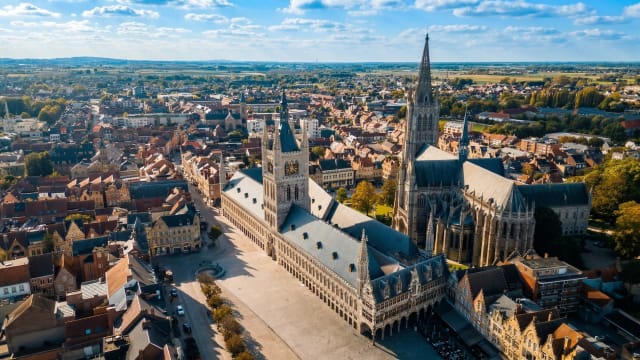
Ypres is a walkable, family-friendly Belgian city with WWI history, the nightly Last Post ceremony, a UNESCO Cloth Hall, and great Belgian food.

Explore Antwerp with kids: from the Diamond District and DIVA Museum to the zoo, Grote Markt, and the best Belgian frites you'll ever eat.

Bastogne is a compact Belgian town with world-class WWII museums, Ardennes forests, and iconic local food. A genuinely moving and memorable family destination.

The Bastogne War Museum brings WWII to life through immersive simulations, life-size dioramas, and a basement bombing shelter that leaves a lasting impression.
Get the latest family travel tips for In Flanders Fields Museum in your inbox.