
Capri
Discover Capri with kids: the glowing Blue Grotto, a chairlift to Mount Solaro, Roman ruins at Villa Jovis, and boat tours past the iconic Faraglioni sea stacks.
0 guides · Naples & CampaniaExplore →
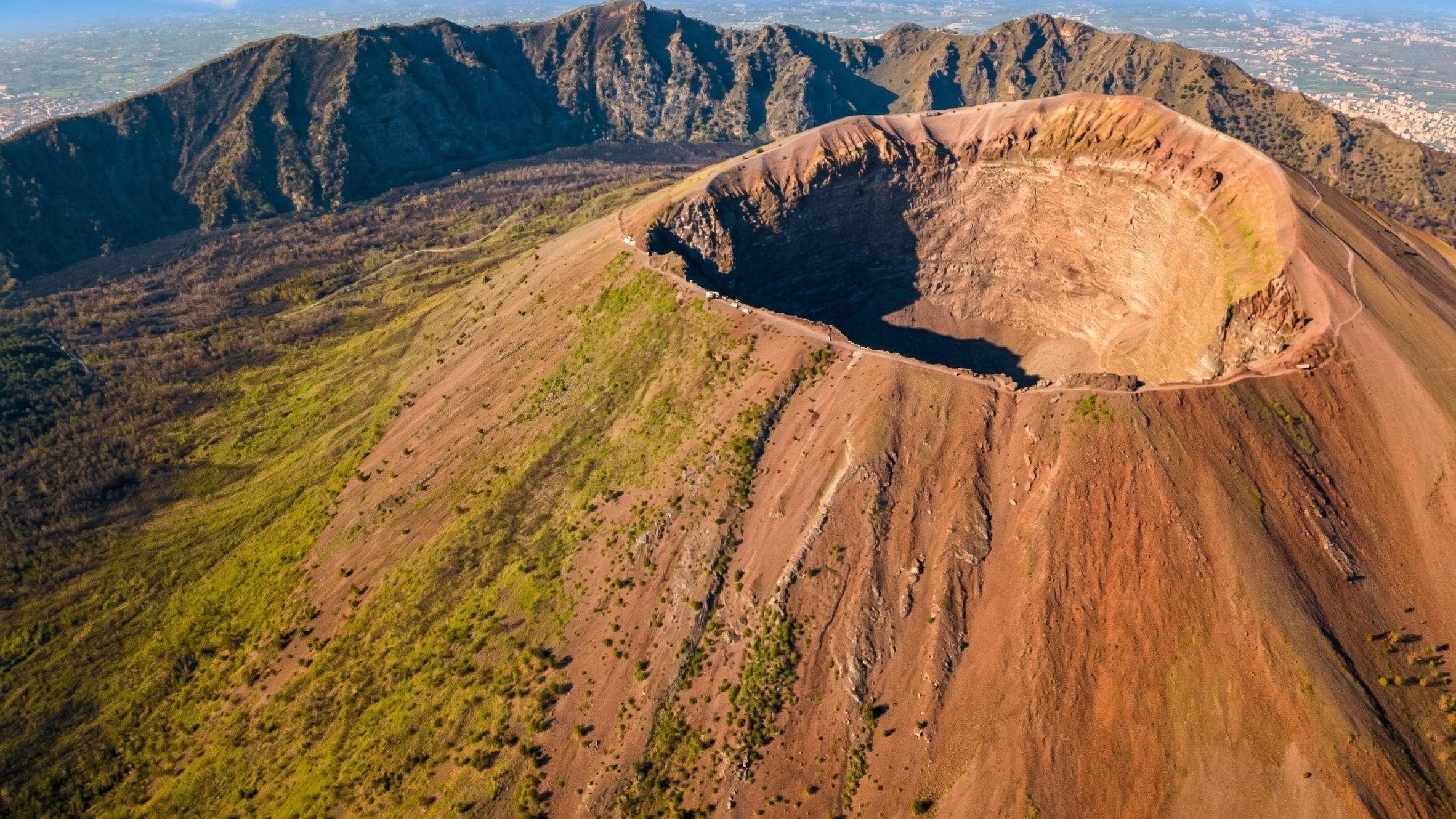
Vesuvius is one of Europe's most dramatic family adventures. Hike to the crater, spot fumaroles, and pair it with Herculaneum for an unforgettable day in southern Italy.
Your family guide
“Nowhere else can your family walk to the rim of an active volcano and look out over one of the most beautiful bays in the world.”
— San & Jo
Mount Vesuvius is one of those places that genuinely stops you in your tracks. As you climb, the trees fade away, the ground turns to dark volcanic gravel, and suddenly you are standing on the rim of a crater that last erupted in 1944. For kids, this is not a history lesson: it is a real adventure on a real volcano.
The hike to the crater is short enough for families to manage comfortably, and the payoff is spectacular. From the rim, you get sweeping views over the Bay of Naples, the towns below, and on a clear day you can spot Capri and the Amalfi Coast in the distance. Wisps of smoke still rise from fumaroles along the crater walls, which makes the whole experience feel wonderfully dramatic.
Vesuvius sits at the heart of one of Italy's most fascinating corners. Pair it with a visit to Herculaneum just down the hill, and your family gets a full picture of what happened here in AD 79. It is the kind of day that sticks with children for years.
Best things to do
Hike to the crater rim
The main event. The path is steep in places with loose gravel and volcanic sand, but it is absolutely manageable for most families. As you climb, the landscape shifts from scrubby vegetation to bare, otherworldly volcanic terrain. The views from the top are breathtaking.
Walk the caldera rim
A safe section along the crater's edge lets you stroll the rim and take in the full 360-degree panorama. On a clear day you can see Capri, the Amalfi Coast, and all of Naples spread out below. Kids love trying to spot landmarks they recognise.
Spot the fumaroles
Look down into the crater walls and you will see wisps of smoke rising from volcanic vents called fumaroles. Vesuvius is still very much alive, and seeing that smoke is a powerful reminder. Kids find this genuinely exciting rather than scary.
Explore the national park trails
Beyond the crater hike, Vesuvius National Park has 11 marked trails covering 54 km of paths through the volcanic landscape. These wind through forests, lava fields, and terraced vineyards. Great for families who want more than just the summit.
Combine with Herculaneum
Herculaneum, at the foot of Vesuvius, is smaller and better preserved than Pompeii and much easier to navigate with kids. Seeing the buried city after standing on the volcano that destroyed it gives the whole story a powerful context.
Taste the volcanic wines
The volcanic soil around Vesuvius produces distinctive wines from heirloom grape varieties. Several local wineries offer vineyard lunches with seasonal produce and local wines. A lovely way to round off a day on the mountain.
Our verdict
Kids
The volcano hike is genuinely thrilling for children. The dramatic landscape, visible fumaroles, and sweeping views create a memorable experience. Steep gravel sections mean younger children need a steady hand.
Nature
Raw and extraordinary. The shift from lush vegetation to barren volcanic terrain as you climb is unlike anything else in Europe. The national park adds 54 km of trails for families who want to explore further.
Culture
The history here is staggering. Pair the volcano with Herculaneum or Pompeii and you have one of the most powerful cultural experiences in Italy. Even the food tells a story rooted in this volcanic landscape.
Food
The Vesuvian culinary tradition is distinctive and delicious. Slow-cooked ragù, baccalà with Piennolo tomatoes, and house-made 'O Nucillo liqueur make this area worth eating in as well as hiking in.
Budget
Vesuvius itself is very affordable. Entry to the national park and crater is low-cost, and the main experience is the hike. Costs add up if you combine with Herculaneum or Pompeii, but the value is excellent.
Planning your visit
2 hours
Quick visit
Hike to the crater, walk the rim, and head back down. Tight but doable.
1 day
Sweet spot
Vesuvius in the morning, Herculaneum in the afternoon. The perfect combination for families.
2 days
Deep dive
Add Pompeii, explore more park trails, and enjoy a vineyard lunch. A full volcanic adventure.
Fun facts
Silent for 1,800 years
Before it erupted in AD 79, Vesuvius had been completely quiet for around 1,800 years. The people of Pompeii had no idea they were living next to an active volcano. It gave zero warning signs before it buried the entire city.
It has erupted 50 times
Since the famous AD 79 eruption, Vesuvius has erupted around 50 more times. The most recent was in March 1944, during World War II, when lava flows destroyed several villages and disrupted Allied air operations nearby.
Two tectonic plates colliding
Vesuvius exists because the African and Eurasian tectonic plates are slowly pushing into each other deep underground. That collision creates the volcanic energy that keeps Vesuvius alive. It is a reminder that the ground beneath Italy is always moving.
Taste Vesuvius
Ragù Vesuviano
Must try'E Curti, Sant'Anastasia
This is not your standard tomato sauce. Ragù vesuviano is a rich, dense meat sauce slow-cooked for hours until it becomes deeply intense and almost sweet. It is the signature dish of this area and completely different from anything you will find elsewhere.
Baccalà alla Napoletana
Local favourite'E Curti, Sant'Anastasia
Salt cod cooked with Itrane olives, capers, and the famous Piennolo tomatoes grown on Vesuvius's slopes. The tomatoes are small, intensely flavoured, and unlike anything you find in a supermarket. A true taste of the volcanic terroir.
Pomodorino del Piennolo
Daily treatLocal markets around Ercolano
These small, elongated cherry tomatoes grow in the volcanic soil on Vesuvius's slopes and have an extraordinary concentrated flavour. You will find them in almost every dish in the area. Try them simply with bread and olive oil.
Minestra Maritata
Safe choice'E Curti, Sant'Anastasia
An ancient peasant soup made with mixed meats and seasonal vegetables, cooked long and slow. It is hearty, warming, and full of character. A dish that has been eaten in this region for centuries.
'O Nucillo
Local favourite'E Curti, Sant'Anastasia
A walnut digestive liqueur made from walnuts grown on Vesuvius's slopes, produced in the area since at least 1904. Adults will love a small glass after lunch. The house-made version at 'E Curti is considered the benchmark.
Discover Capri with kids: the glowing Blue Grotto, a chairlift to Mount Solaro, Roman ruins at Villa Jovis, and boat tours past the iconic Faraglioni sea stacks.

Herculaneum is a beautifully preserved Roman site near Naples, perfect for families who want vivid history, stunning mosaics, and a quieter alternative to Pompeii.

Ischia is a volcanic island in the Bay of Naples offering families thermal springs, medieval fortresses, lush hiking trails, and some of the most distinctive food in Italy.

Discover Naples with kids: ancient tunnels, world-famous pizza, a free seaside castle, and easy day trips to Pompeii. Here's everything your family needs to know.
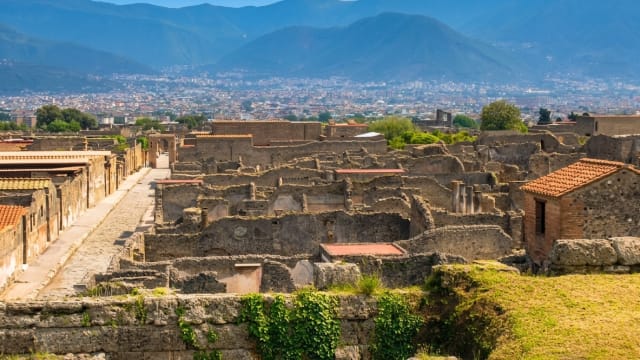
Pompeii is one of the world's most extraordinary family destinations. Walk ancient streets, discover plaster casts, and explore a city preserved by Vesuvius since AD 79.

Sorrento is a cliffside gem on the Bay of Naples with cobblestone streets, ancient history, natural swimming spots, and incredible food for the whole family.
Get the latest family travel tips for Vesuvius in your inbox.